Exercise
Inverted Row: How to Do It, Muscles Worked
The Inverted Row is a beginner-level strength exercise that primarily works the middle back, with the lats as secondary muscles. It uses no equipment, and is performed in 5 steps, following the form cues, common mistakes and sets/reps guidance below.
What muscles does the Inverted Row work?
The Inverted Row primarily targets the middle back, and also recruits the lats as secondary muscles. It's classified as a beginner-level strength movement using no equipment.
What are the most common Inverted Row mistakes?
- Rounding the upper back rather than keeping the chest up through the pull.
- Using momentum — a body swing or a jerk of the torso — instead of pulling with the target muscles.
- Letting the shoulders shrug up toward the ears instead of pulling the shoulder blades down and back.
- Cutting the range of motion short instead of pulling through a full stretch and full contraction.
How should I program the Inverted Row — sets, reps and frequency?
As a pulling movement, it responds well to a moderate-to-heavy 6-10 reps for 3 sets while technique is being built. Most lifters train it once or twice a week as a primary movement in a push/pull/legs or upper/lower split. Add small amounts of weight or an extra rep once every working set can be completed with good form — the same progressive overload principle behind every strength exercise in the library.
What are good Inverted Row variations and alternatives?
- Bent Over Barbell Row — barbell, beginner level, middle back
- Bent Over Two-Dumbbell Row — dumbbell, beginner level, middle back
- One-Arm Dumbbell Row — dumbbell, beginner level, middle back
- Seated Cable Rows — cable, beginner level, middle back
| Attribute | Value |
|---|---|
| Level | Beginner |
| Equipment | Bodyweight |
| Category | Strength |
| Primary muscles | Middle Back |
| Secondary muscles | Lats |
How to do the Inverted Row, step by step:
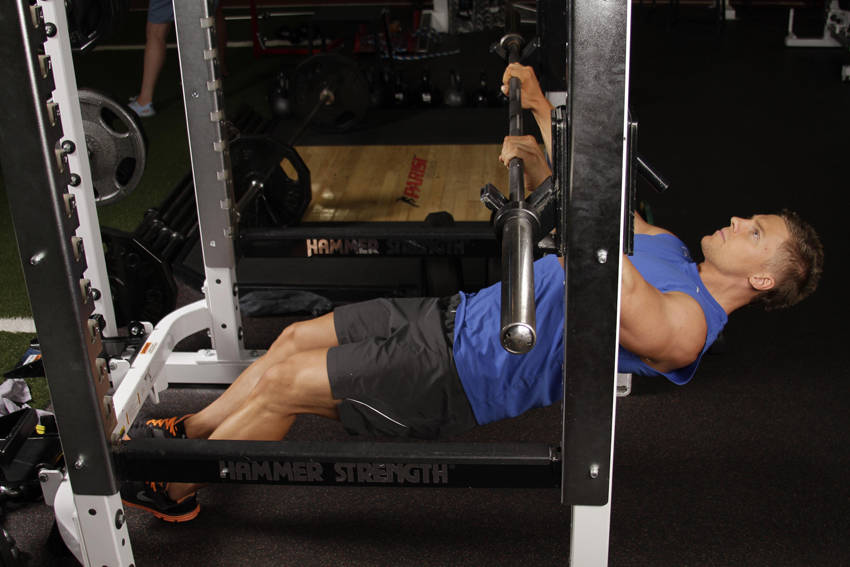
- Step 1. Position a bar in a rack to about waist height. You can also use a smith machine.
- Step 2. Take a wider than shoulder width grip on the bar and position yourself hanging underneath the bar. Your body should be straight with your heels on the ground with your arms fully extended. This will be your starting position.
- Step 3. Begin by flexing the elbow, pulling your chest towards the bar. Retract your shoulder blades as you perform the movement.
- Step 4. Pause at the top of the motion, and return yourself to the start position.
- Step 5. Repeat for the desired number of repetitions.
Key takeaways
- The Inverted Row is a beginner-level strength exercise using no equipment.
- Primary muscles worked: Middle Back; secondary: Lats.
- A typical working range is 6-10 reps for 3 sets while technique is being built.
- The most common technical fault is rounding the upper back rather than keeping the chest up through the pull.
Log the Inverted Row in your next workout
Try IRONSLOG freeFrequently asked questions
Is the Inverted Row suitable for beginners?
Yes — the dataset lists the Inverted Row as a beginner-level movement, though anyone new to training should still start with light weight (or no added weight) to learn the pattern first.
What equipment do I need for the Inverted Row?
None — the Inverted Row uses bodyweight only.
What's the difference between the primary and secondary muscles listed?
Primary muscles (Middle Back) do most of the work and are usually the limiting factor in the set. Secondary muscles (Lats) assist or stabilize but aren't the main driver of the movement.